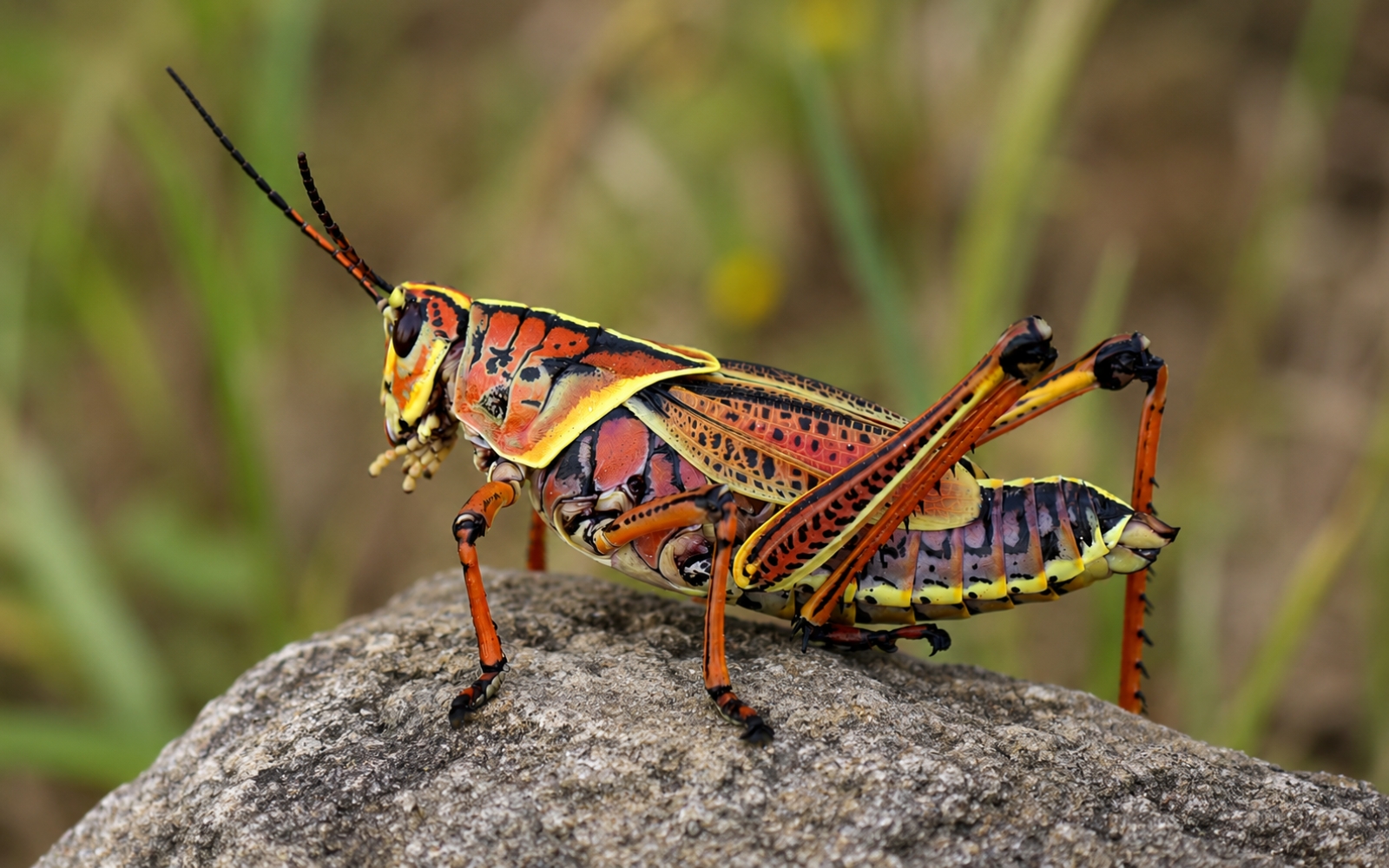
Lubber grasshoppers in Tampa Bay are back for the season, and if you’ve spotted giant black, orange, or yellow insects marching across your driveway or neighborhood sidewalk, you’re not imagining things. These massive armored bugs make their annual return every spring, and homeowners in Brandon, Valrico, FishHawk, Lithia, and Riverview know exactly what that means for their yards.
While their cartoonish size can look alarming, they don’t pose a danger to you or your pets. The real threat is to your landscaping.
What Do Eastern Lubber Grasshoppers Look Like?
The Eastern lubber grasshopper (Romalea microptera) looks completely different depending on its age. The name “lubber” comes from an old English word for lazy or clumsy, which perfectly describes how they move. Too heavy to fly and terrible at leaping, they mostly just crawl slowly over vegetation.
Young lubbers hatch in the spring completely black with neon yellow, orange, or red stripes running down their backs. They emerge from the soil all at once, which is why you’ll often find dozens of them tightly clustered on a single plant.
By mid-summer, adults grow into heavy-bodied insects reaching up to 3.5 inches long. They shift to a dull yellow or tawny color with black spots and small, useless rose-pink wings. They look like something straight out of a sci-fi movie.
Are Lubber Grasshoppers Dangerous to Dogs and Cats?
One of the most common questions from local pet owners is whether these giants are dangerous to curious dogs or cats. Good news: they don’t bite or sting. However, they do have a pretty gross self-defense system.
When a dog gets too close, a lubber will spread its tiny wings, make a distinct hissing sound, and release a foul-smelling foam from its sides. This froth tastes terrible and can make a pet physically sick if swallowed. Florida pets tend to learn very quickly to give these colorful, hissing bugs a wide berth and so do kids spending time outside this summer. If you’re looking for ways to keep your family busy outdoors despite the critters, check out our guide to things to do with kids in Brandon FL this summer.
What Plants Do Lubber Grasshoppers Eat?
While humans and pets are safe, your garden beds are not. Lubber grasshoppers have voracious appetites and can completely defoliate a plant in a short amount of time. They feed on over 100 different plant species across Florida, but they have a few clear favorites.
If you have any of these in your yard, check them daily during lubber season:
- Amaryllis and Crinum lilies
- Oleander and Canna lilies
- Mexican petunias
- Citrus trees
- Vegetable gardens, especially peas, beans, and kale
FishHawk and Lithia homeowners with mature landscaping and established garden beds are especially likely to notice damage early in the season.
How to Get Rid of Lubber Grasshoppers in Tampa Bay
The single most important tip from University of Florida UF/IFAS experts is to act early.
When lubbers are still small and black in the spring, their shells are soft and they’re highly susceptible to spot treatments using insecticides containing carbaryl, bifenthrin, permethrin, or spinosad. Once they mature into large armored adults, their thick shells make most chemical sprays far less effective and the chemicals can end up harming beneficial pollinators in your yard instead.
For adult lubbers, the most effective method is old-fashioned manual removal:
- Glove up. Put on a pair of sturdy gardening gloves before you start.
- The drown method. Fill a bucket with water and a generous squirt of dish soap. Hand-pick the slow-moving grasshoppers off your plants and drop them in. The soap breaks the surface tension and takes care of them quickly.
- The stomp. If you’re not squeamish, many local gardeners simply knock them onto a hard sidewalk or driveway and handle it from there.
If you’re dealing with a full-on invasion actively destroying high-value landscaping, it may be time to call in a local pest control team before peak season hits in July and August.
Lubber grasshoppers in Tampa Bay start hatching from the soil in late March through April, with nymphs most visible through May and June. By mid-summer they’ve reached full adult size and become much harder to control. That spring window is everything, catching them early gives you the best shot at protecting your plants without heavy chemical treatments.
Otherwise, take a breath. Lubber grasshoppers are just a quirky, seasonal part of life in the Sunshine State. They’ve been here way longer than we have.